Saturday, March 22, 2008

HOLIDAYS

Holidays were an important part of our life. Christmas, Easter and Thanksgiving were important in shaping our life’s and character. You knew the holidays were coming when my mother started cleaning. She’d start a week or two before the holiday and finish the night before... Many times she would buy new curtains or linens. She bought them through a man we called Srider Meider, he a was short, balding Jewish man with a red face and gravel voice... He would bring samples or sometimes take my mother to a store to select the fabric or goods. Once bought she would pay him weekly and when paid off buy something else. She always liked to have something new and fresh for the holidays.

The windows were washed, then the curtains washed, stretched and hung before the holiday. The kitchen curtains were hung the night before the holiday. I can still see my mother on Christmas Eve ironing and hanging kitchen curtains. The house smelled fresh and clean.

When Christmas came my father would take the kids shopping for a Christmas tree. One year the neighbors across the street brought trees in from Wisconsin and sold them in front of their house. It was one of the nicest trees we ever had, Another year we bought a tree on Damen near Augusta Blvd, and I remember carrying it home. The most memorable time was when I went with my brother, in a snowstorm, to Riverview Park to buy a tree, It was 1947 and he was about 21 or 22, had a car and out of military service. While driving to Western and Belmont we were listening to the Championship Football game between the Chicago Bears and Chicago Cardinals. Jack Brickhouse and Irv Kupcient were doing the play by play on WGN. The sponsor was Standard Oil. It was a great game won by the Cardinals who were lead by quarterback Paul Christman and the all-star backfield of Pat Harder, Elmer Angsman and Charlie Trippi. We found a nice tree, placed it on the roof of the car and brought it home. Once home we placed the tree in the Shandra where it was kept until ready to be decorated.
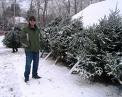
A week before Christmas we would bring the tree up to the back porch, my father with saw and chisel in hand shaped the bottom of the tree to fit in the old wooden cross tree stand. It was always a challenge, and after some cussing he would get it to fit. The tree was brought into the house and placed in front of the front room window... In the meantime we would bring down the lights and ornaments from atop the China Closet. The lights were tested and burnt out bulbs replaced. Once the tree was set, my father hung the lights and then we decorated the tree with ornaments, garland and silver. We always had favorite toys such as the clown face or colored stars. My sisters decorated the bottom of the tree with cotton and toy houses. The tree touched the ceiling. The lights sparkled on the woodwork and brought alive the feeling of Christmas. If it was a Sunday the radio was tuned to Lionel Barrymore and the Mercury Theatre presentation of a Christmas Carol. .

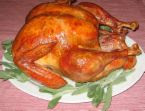
On Christmas morn we’d awake running to the fireplace to see what Santa had brought! Our stockings were hung on the gold railings of the fireplace. For stockings we used my sister’s old long ugly winter brown stockings. My parents didn’t have much money during those early years so our stockings would be filled with fruit, nuts and loose change. We were lucky if we got a toy. My sisters and brother would go to church while my mother prepared Christmas dinner. For the Christmas meal she would invite guests for turkey, sweet potatoes, salads, and maybe a cake and jello.We always enjoyed her potato salad. My father’s brother would spend the holidays with us. He followed my father from Russia, leaving behind a wife and daughter. They were to have followed him to the U.S., but that never happened.

After Christmas we normally had a visit from my godfather’s wife. She and her sister had been close friends with my mother. She would come every year from the town of Cicero to bring me a Christmas Gift. They were very generous. One year they bought me a wagon and another year a tricycle. My godfather was a motorman for the elevated system. One year they invited us for Christmas dinner. She was a wonderful cook and quite handy. In fact she made her own flocked white Christmas tree. It was beautiful.

Thanksgiving was another exciting holiday. We always seemed to have different people for dinner. The weather would be turning cold and sometimes there would be snow. Since my father didn’t have any family, except his brother, he would invite some Russian friends to join us for the holiday... Thanksgiving meal was much like Christmas. In the morning before dinner my father would go to the shandra and chop wood for winter. It was neatly stacked and ready to keep us warm during those cold winter months. Once the guests had arrived we had dinner served in the dining room. The table was extended, providing plenty of room... After the meal the guest would talk and visit. Sometimes my brother-in-law would get some people to join him in song and merriment.
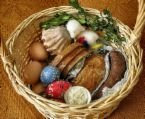
Easter was another biggie because it was a time we got new clothes. My mother liked to dress her kids up for Easter. Although my mother and father weren’t steady church goers she always saw too it that we all went to church. There was no excuse to miss mass or confession before Christmas or Easter. Easter was centered around the preparation of food. We’d shop for polish sausage(kielbasa) and ham(Synka). We would buy a couple of sticks of horseradish and made our own horseradish. My father normally made it but eventually I inherited the chore. First you would scrape the old skin off the plant, and then grate it. As you would do this the strong scent carried into your nose causing you to tear and cry. It was always strong. After grating you would grate some whole red beets and mix the horseradish in with a little salt, sugar and vinegar. Walla, we had the best red horseradish in town. On Good Friday evening we would color Easter eggs. We’d shine them with lard or Crisco. On Holy Saturday my mother prepared the Easter Basket by placing eggs, kielbasa, ham, horseradish, butter lamb, container of water and bread in it. We’d head off to St. Aloysius Church which was located at Claremont and LeMoyne for the blessing of Baskets. The basket would be blessed and ready to feed us on Easter Sunday. We had so much Easter food that it lasted for days.
When we celebrated Easter the Russian Orthodox Church celebrated Pusey Willow Sunday, the equivalvaent to Palm Sunday. Sometimes I would go with my Father to the Holy Trinity Russian Church on Leavitt... The Russian services were long, they lasted several hours. There were no pews and you stood throughout the service. The priests were dressed in fancy robes and headdress. They sang their chants and prayers in Russian. It was a moving experience.

There was a lot of tradition in the holidays and we try to continue them to this day. I hoped you enjoyed the discussion. Please join me next week as we return to the Front Porch to discuss the War Years.


Sasiad

Monday, March 17, 2008

AS TIME GOES BY


Today let’s begin with a little history of the family. My father was born in 1895 in Ternavka, a small village in the Russian Ukraine. His family lived on a farm in the rich farmlands of the Ukraine. He had three brothers. He came to America at the insistence of his mother to escape the tyranny of the Russian Revolution. He set sail on the Vaterland and arrived at Ellis Island in 1914. It was a bold an adventurous journey for a 19 year old who didn’t know the language or anyone in a new home called the United States. He came to Chicago and boarded with a Polish family. There were other boarders and the lady of the boarding house was known as Hazika. My father went to evening school and learned to write, speak and read English. In a very short time he was competent in the language and soon found work in the picture frame industry...

My mother was born in 1903 in Philadelphia of Polish parents. Her parents were born in Szczawnica, Poland. At an early age she made two trips with her parents to visit her grandparents in Poland... She had two brothers and twins that died when babies. Her mother died when she was 13. Her father remarried and had two boys and a girl with the second wife. My mother completed most of grammar school but had to quit and go to work. She worked for a Jewish family cleaning house. Her father died in 1929. She met my father through Hazika. They were married in 1922. They had three girls and two boys; I was the youngest. My oldest sister was 15 and the youngest sister 7 when I was born. My parents had a long history of living on Evergreen Avenue. They lived in two different houses before moving to 2143 W. Evergreen. My Uncle Frank owned the grocery store and then bought a 3 flat three doors down. During the depression Uncle Frank lost everything and my parents moved to 2143 where I was born.

My mother was the boss; she managed the house, kids and money. My father was easy going and brought home the pay. Times were rough during and after the depression. Somehow my father was able to work and support the family. By the time my three oldest siblings were 16 they quit high school. Education wasn’t a priority when the family needed financial help. It was an era when working in a factory and steady work was looked upon as success. By the time young people were 19 or 20 they were getting married. We were a disciplined family and followed the rules. If you got out of line, the strap came out and you scurried to find safety. No no, no don’t hit me!

Supper time meant everyone sat down together. We learned to share and work together. Everyone had chores. As you got older the chores went down the line. Pretty soon I had inherited the chores. You learned to respect each other and bind together. We weren’t an outward affectionate family, but inside had the love and respect for each other. The credit goes to my mother and father for instilling good values: honesty, hard work, respect, courtesy, the tradition of family, how to manage good and bad times, responsibility, cleanliness, and to be a good person.

My mother was quite sociable and liked to entertain. Although we didn’t have much, we always seemed to have guests and plenty of food and drinks on the table. My relatives would take turns visiting .Uncles were called Wujek, aunts ciotka,grandma busia and grandpa dziadek. The kitchen table was the vocal point for the visit. .For the men my father would bring out a quart of beer and a half pint of whiskey and coffee or soda was served for the ladies. Around supper time my mother served lunch meat, bread, pickles and cake. When my uncles came they liked to play cards, 66 was their game. They would argue and accuse each other of cheating. They took this game seriously. They smoked cigars and sometimes cigarettes. The kids weren’t allowed to congregate with the adults, they stayed in another room. At the end of the evening they would say their good byes and head home. Most lived within walking distance and some would take the street car.

I can recall when my oldest sister was dating that my mother invited her fiancé and friends for Sunday dinner. They were from Pennsylvania and weren’t fortunate to have good home cooked meals. My mother served golambki and won everyone over. One of the memorable guest was the father of my future brother-in-laws friends. His name was Pop Laskowski. He was a tall, gray haired, slender man in his sixties. He loved to sing ,his favorite song was Jak Sybko Mila Chwile, As Time Goes By, In fact the whole group loved to sing and we where entertained with their harmonies of: Down By The Old Mill Stream, Dinah, I’ve Got Six Pence, Me and My Gal and other songs of the 30’s and 40”s. Their visits brought joy and happiness to the house.

When you talk about happiness and fun times I remember my youngest sister’s First Communion Party. It was held on the 2nd floor and all the aunts and uncles came. They were a fun bunch and liked good times. To celebrate they formed a band of combs, scrub board, paper and other items to make musical sounds to which they sang their favorite Polish songs. The windows were open and the merriment could be heard down the street...

In the summer my uncles would take us picnicking at Dam No. 2 or 4 on the far Northwest Side. My mother fried up hamburgers, prepared breaded pork chops, potatoe salad, coffee would be put into an empty gallon bottle and everything placed in a big picnic basket. This was a treat and always exciting. At one time I remember going in a truck, otherwise we traveled in one of the uncle’s cars... My father never owned or drove an automobile. The families didn’t own homes, everyone rented, and free time was for family. In those days cars had running boards while the small coups had rumble seats. Rumble seats were seats that are now occupied by your trunk and they would open outward with two seats. They had no roof and you were vulnerable to the weather.

One of my most favorite times was visiting Coitka Wlodska, Aunt Lucy, in Chicago Heights. We’d start out early on a Sunday taking a Damen Avenue Streetcar to Halsted Street and Halsted all the way to Harvey where we would pick up a bus to Chicago Heights. Once in Chicago Heights our Uncle Schultz would pick us up in his car. He was wild and drove like a maniac. They lived in an old frame house. They shared a bathroom with a next door neighbor; the bathroom was interesting because the water closet was on the wall near the ceiling. In the back of the yard they raised pigeons which were kept in little houses or coups. Ciotka had a large garden where she grew vegetables for canning. I always loved to come for her pork roast and roast potatoes. The best roast potatoes you ever tasted. She was a cook at the local country club. After several hours we would start our trek back home.

In the summer we would have visitors from Philadelphia, my mother’s mother’s brother, Wujek, would come with his daughters Mary and Nellie and spend several days with us. At times we would have other relatives from Philadelphia. My Uncle John was also a periodic visitor. He was a career soldier and came with his wife. It was never boring; there was always a variety of friends and relatives to make things interesting. I still can’t figure out how my mother managed, housed and fed all those people...


Next week I would like to continue our discussion by talking about holidays and how they were spent at 2143 W. Evergreen.


.

Monday, March 10, 2008

REVISITING THE 2ND FLOOR


After that long walk let’s visit the 2nd floor and see where I lived and grew up. We enter through the porch hall door and go up a long flight of stairs to the 2nd floor. I remember falling down those stairs many a time. When you enter the apartment you come into the dining room. At this point I have too ask you to take off your shoes. If we go to the left you’ll find the front room and a small bedroom... The bedroom has a window and small roof that overlooks Evergreen Avenue. The room had a bed, old wobbly dresser and chair, There was no door. The front room had three large windows that faced an alley that went all the way to North Avenue. There was a fireplace that was never used, we always felt it unsafe. In the front room was a 3 cushioned red couch, matching red chair and two coffee tables, a table lamp and floor lamp. Yes, we had electricity. By the fireplace I kept a small brown bear. There were 3 bedrooms each with linoleum floors to cover the rotten floors, the kitchen had linoleum and the front room and dining room had 9x12 oriental looking rugs, there was a long runner in the dining room. In between the front room and dining room was a sliding door that was never used .In the dining room we had a large dining room table and chairs, a cedar chest, radio ,an old fashioned victrola (phonograph), pot belly coal stove and telephone bench. The walls were wallpapered and there was a mirror over the fireplace and a floral picture in the dining room. My father’s wedding portrait decorated a wall in the dining room. In those days we had the black phone with no dial. There weren’t many phones so you placed your call through an operator. Most calls were made from outside phone booths found on nearby street corners. To save money you purchased a party line that was shared with one or two parties. It was interesting to pick up the phone and hear someone’s conversation, you waited till they were finished than initiated your call. At the end of the dining room, on the right, was a large bedroom with two windows and a closet. This bedroom had a bed, dresser, chair and a metal clothes closet.

As we leave the dining room we enter a small hallway, on the left was the bathroom with a tub, window, toilet, sink and a wall medicine cabinet... On the right side of the hallway was a built in china closet. In the china closet was kept our finer china and below where drawers to store linens and miscellaneous items. On top of the closet was open space for Christmas decorations. Next we enter the kitchen, on the left was a small cabinet for silverware, on top was a red corning pot, then came the kitchen sink with an oval mirror hanging above, a wringer washing machine, water heater and coal stove. Next to the coal stove was a Universal Gas Range. Yes we had gas. Next we had a window with a Singer Sewing machine in front of it. On the far wall was another window which looked out onto the back porch. We had a chair in front of the window and then we had our ice box. On the right side of the kitchen was a kitchen table and chairs. After entering the kitchen from the hallway on the right was a bedroom. The bedroom had a window, bed and dresser. It also had a closet. On the far right side of the kitchen was a pantry where we kept our groceries and everyday dishes. It had a window and wide shelve and underneath three drawers for pots, pans and utensils. The bottom drawer was for old newspapers. The newspapers were used in the winter months as Polish Carpets to keep the rugs clean. On the floor of the pantry you could find a wooden tool box, a large glass crock for storing potatoes and onions. After the pantry was the back door which led to the back porch and down to the back yard, on the porch was an old rocking chair. The winding stairs led to the yard and on the right stairs that led to the basement. It was always dirty and dingy. In the basement we had a shed for goal where we stored soft coal for the dining room and hard coal for the kitchen... Pulaski Coal Company would deliver the coal thru a window into the shed. We also had a small shed, known as the Shandra, for wood, wagon, screens and bundled paper for junk. Every year around Thanksgiving my father would chop and store wood in the Shandra for winter...

In the back yard was a garage, it was messy and never occupied... There was a back gate which led to the alley. Initially there were no garbage cans, maybe a slab or small area for dumping garbage. It wasn’t sanitary and attracted flies and rodents. Kids hunted the rodents with BB guns. Across the alley was an empty lot which led to Potomac Street. There was a two story house west of us and a three story house in front of it. On the East side was a two story home with yard and barn... Our back yard wasn’t well kept, more weeds than lawn or flowers. The houses with homes in the back didn’t have grass, they had concrete. Between the houses was a gangway that led to the front street.

Because of the airy windows and coal stoves, it was difficult to heat the apartment. Winters were extremely cold. Our front windows would freeze and you couldn’t see out. Jack Frost was a frequent visitor and we had long aisicles hanging down the windows and fine sculptured ice paintings on the windows... By morning the coal stoves would burn out and you’d wake up freezing. The ritual was to have wood, paper and coal on hand to start a new fire... Everyday we would take out the ashes which were collected from the bottom of the stove. The ashes were dumped in the alley and if icy used on the sidewalks. It was not unusual for the stove pipes to get red hot; I always thought they would explode. , Each day someone would go to the shed and bring up two buckets of coal and wood. Brrrr.

The kitchen was the main room where meals were prepared, clothes washed, hung to dry, and ironed. Monday was wash day. . When I was 2 or 3 my mother used a wash tub and scrubbing board, later she upgraded to the wringer washer. We would move the washer near an electric outlet near the bed room and carry buckets of water to fill it and empty it. She would use American Family Flakes, Rinso or Oxydol to wash the clothes. In the cold months we would hang ropes in the kitchen and hang the laundry to dry. Sometimes the laundry was sent out to Alba Laundry. Some clothes would be hung on the back porch. I can still picture my Levis standing tall and frozen at attention on the porch... In the summer months we set up a pulley from the back porch to the garage to hang the clothes to dry. Tuesday and Wednesday were set aside for ironing. Since money was limited we had a lot of soups. There would be kapusta (cabbage) soup, borsht, potatoe,barley, split pea; and in the summer, potatoes and buttermilk (maslanka) or rice and milk. We’d get a meat bone and soup greens for vegetable soup. For meat we had cheaper cuts such as liver or kidneys. We rarely indulged in steaks and chops. On Sunday we would have chicken soup and mayonnaised lettuce. A rare treat would be golambki (stuffed cabbage). We always had milk, coffee and tea to drink. Since we did not have refrigerators the food was bought fresh and made the same day. It was rare to have leftovers. For breakfast we had hard rolls or sweet rolls, sometimes oatmeal or eggs. For lunch we had lunch meats: ham, krakoska, spice ham, minced ham, and maybe liver sausage. Periodically we had polish sausage or hot dogs with pork and beans. Sometimes we had fried baloney. A lot of food was fried and not especially healthy. Fridays were fish days and meat was forbidden... Although money was tight, we were never deprived and always had plenty to eat.

My mother was extremely clean which meant we were always cleaning. Everyday we dusted, fixed the beds, washed dishes, used the manual carpet sweeper to clean the carpets and shook out throw rugs. In those days people didn’t have vacuum cleaners... The kitchen floor was washed 3 or 4 times a week. Weather permitting the windows were washed inside and out every month, You’d have to sit on the outside window ledge and pull the window up and down to wash the outside.. There were times that we would have to change the window ropes that were tied to the weights in the window frame. When the windows were cleaned my mother would wash and stretch her curtains. All the windows had shades. The front room and dining room curtains were starched and stretched. We had a curtain stretcher that occupied part of the dining room for curtain stretching. All the woodwork was polished with ole cedar polish and gave off a sparkling radiance to the dark woodwork found throughout the house. The hallway stairs were washed every week. Periodically we would take the couch cushions outside and clean them by beating them with a wire stick. The same held true for some of the rugs. The stove pipes and stoves were polished with black stove polish. Once a year the walls were washed. .The house was cleaner than clean...

By the mid 1940’s we had upgraded to a refrigerator and small kitchen gas heater.

Next week when we come back we’ll continue to discuss life on the 2nd floor of 2143 W. Evergreen.

Sasiad

Tuesday, March 4, 2008

LEAVITT STREET


As we cross Hoyne Avenue you’ll find a Sinclair Gas Station on the Southwest corner. In those days there weren’t many gas stations and infact there weren’t many cars. Because of the war, production had stopped and you only saw two colors, black and red. Gas was cheap and you had service; the attendant pumped your gas, cleaned your windows and checked your tires. A few doors down was the Strand Theatre I would go to the Sunday Matinee, the cost was 8-10 cents and candy a nickel. In the summer I remember the blue and white “KOOL”, sign. The theatres were the escape from the hot, lazy days of summer. The Strand featured B films such as: The Bowery Boys, Charlie Chan, Roy Rogers and Tarzan. You saw two films, double feature, with a cartoon, coming attractions and possibly a newsreel. My favorite cartoon was Mighty Mouse. The theatre opened at 1 P.M. and the shows were continuous, which meant they had no start or end time. At times they would have an intermission to collect money for the March of Times. In the middle of the week the Biltmore or Strand would have Dish Night. Dish Night was a time for ladies to collect a set of china or glasses. Each week they would collect a different dish. Today we still have some of those dishes. Across the street was Grossman’s Dry Good Store. It was a small store that sold a variety of clothes for kids. The store would be packed to the ceiling with socks, T shirts and other items. As we walk along we’ll pass more small shops until we reach the corners of Division and Leavitt.

To me this was a very historic corner. On the South East corner of Leavitt was a drug store and about a block south was the Russian Holy Trinity Orthodox Church. The church is a historical landmark. In the same area where St. Mary of Nazareth and Lutheran Deaconess Hospitals. Coming back to Division Street on the north corner was a little newsstand shack where we bought our newspapers. On the southwest corner was a chicken store selling fresh chickens. We could continue down Division Street to Humboldt Park, but I think it’s time to head on home. Before we head home, I can still envision people on a hot summer evening, with blanket in hand, going to sleep in the park. There was no air conditioning and it provided a comfortable and safe way to get a good nights rest. Police patrolled the streets on foot and the people were safe.

We’ll now head north on Leavitt. For what was considered a residential street it certainly had a variety of businesses. At the alley past Division was a Junk Yard where junkman parked their wagons and carts to sell their junk. During the War Years paper and rags were in demand; I would take my wagon with rags and a few bundles of paper and make a few pennies. On Leavitt and Crystal was a grocery store and near Potomac was Orries Fruit Store. At the corner of Potomac and Leavitt were Mutchniks Drug Store and Adams Tavern. A little past Mutchniks was a Jewish Bakery which had the greatest rye bread and rolls that you would ever eat. I loved their egg wash and salt stick buns. Across the street was a fish market. My father liked the Smoltz Herring. Going east on Potomac you would find another grocery store. There were plenty of the ma and pop stores. As we continue down Leavitt there was a pickling plant that made pickled pigs feet. You have too remember that these shops were all snuggled in between two and three story homes. On the same block were a shoemaker and a bike shop. A lot of times the storeowners lived in the back or second floor of the building.

Well, we have finally reached Evergreen Avenue. On the corner was Tony’s Tavern and across the way. my favorite candy store. In the summer I loved the ice cream sandwiches; the ice ream was sliced and placed between two slices of waffles.. My favorite ice cream was Neapolitan. The popsicles, fudgeicles and ice cream cups were also great... Next to the candy store was the Cheer Up Soda Factory. Cheer Up was similar and maybe even the predecessor to 7UP. If we would continue down Leavitt we would hit John’s Tavern located at Schiller Street; residential homes followed all the way to North Avenue. My father would buy a bottle of Canadian Ace, Schlitz, Fox Deluxe or Meister Brau at John’s. Topaz was the soda sold, in taverns, in the 40’s. On Sunday the men would get a free drink with their purchase, I f I was lucky my father would bring home a bag of Hi Ho Potato Chips.

For me Evergreen Avenue started at Leavitt Street and ended at Milwaukee Avenue. This was home. As we pass Tony’s we have Neuman’s Grocery Store. This was our neighborhood store. Here we bought our meats and most of our groceries; it was the hub for information and news. I still remember the long stick with a grabber at the end to bring down a roll of toilet paper or box of cereal. The store was open from 6AM to late in the evening, and part of Sunday. On many a day I remember going back and forth because I or my mother forgot something. Being a small kid you would find grown ups always trying to get ahead of you? You had to stand your ground. There were no numbers and you stood in line. Since many of the neighbors were Polish you would hear a lot of Polish. For instance I recall the famous line “Jak Sie Masz” and the reply “Jak Stary Kaczi” which meant “How Are You”” Like Old Underwear”.

Well, we’re back at 2143 W. Evergreen and The Front Porch. I hope you enjoyed the tour of the neighborhood. I certainly miss the neighborhood of old, the shops, the architecture, the friendliness of the people and the secure and safe feeling.

Till next week

Sasiad

Thursday, February 21, 2008

DIVISION STREET

Let’s pickup our tour at Milwaukee, Division and Ashland Avenue. This area was known as the Polish Triangle. Here you would find the center for the publication of the Polish Newspapers: Dziennik Chicagoski and Dziennik Zwiazkowy (Polish Daily News). The Polish National Alliance and Polish Roman Catholic Union were located in the area. The PNA and PRCUA are large fraternal organizations that serve the Polish Community. My family belonged to the PNA and our society was called Brothers Under Three Crowns (Braci Pod Tre Coronie). You paid dues which entitled you to a small amount of life insurance and social activities such as dances and picnics. The Polish community is called Polonia. The Polish Catholic Church was the center of the Polish Community and nearby you could find Holy Trinity and St. Stanislaus Churches. My family belonged to Holy Trinity and it was the practice in those days to get confession cards. When you went to confession to make your Easter Duty you would turn your card in. This kept you in good standing and ensured that you could be buried from the Church. Polish High Schools had prominent locations in the area: Weber, Holy Trinity, and Holy Family High Schools. The Triangle had a little area for congregating and socializing. It was an area some of the neighborhood literary people would meet, notably Saul Bellow, Nelson Algren and Studs Terkel who wrote a book called”Division Street”. I can remember some of the stores in the Triangle such as Sajewski Music, Starsiak Clothing, The Wisniewski Funeral Chapel., Manufacturers Bank, Michaels Herb Teas, as well as a store to send packages to Poland.

OK, let’s start walking down Division Street. You’ll notice that the sidewalks are very wide, something you didn’t find on Milwaukee Avenue or other major streets in the area. Like Damen Avenue there were streetcars that provided transportation east to Downtown Chicago and west towards Humboldt Park. We’re going to head west towards Humboldt Park. Near the Triangle was the Crown Theatre and YMCA.. Spanning across Division Street were Elevator Tracks and nearby was the Post Office. Past the El Lines was Alliance Bakery known for its tarts and fancy pastries. During the 40’s Division Street was known as Polish Broadway for its bars and polka music. On the weekend the area came alive with Polka Music. Bars lined the street from the Triangle to California Avenue. I only remember a few of the names; Lucky Stop, Zakopane Lounge


and Midnight Inn. Let’s go back in time thru You Tube and listen to some of that honky music. I know you’d like to stay but we have to move on. Andersen Grammar School was nearby. It’s pretty quiet until we reach Damen and Division.

At the corners of Damen and Division you would find a bustling area of business and activity, something like the Triangle. Most memorable was a tobacco shop and haberdashery. At the haberdashery where shoe shine stands and a place for men to have their hats cleaned and blocked. Across the street was Brown and Koppels known for its corn beef sandwiches. The Biltmore Tire provided tire and auto accessories. There was Hammer’s Florist, a greeting card store, beauty shop, Bath House, and other small shops. I believe the Bath House was there to provide bath facilities for men who boarded and lacked facilities in the area. As we near Hoyne Avenue we find Biltmore Hardware, Boniface Bakery, I loved their whipped cream cakes and pies, on the corner was a tavern.. Before the bakery was the Biltmore Show one of the theatres that I would go to. The Biltimore was part of the Balaban and Katz chain which operated the Chicago Theatre. It was classier than the Crown, Royal, Wicker Park or Strand which we’ll visit next week. The tickets cost more and they ran better movies. Right around the corner on Hoyne was the cleaners that we would go to. We are now only three blocks from home and Evergreen Avenue.

Next week we’ll cross Hoyne Avenue and continue our walk down Division Street.
Sasiad

Thursday, February 14, 2008

ON THE AVENUE

Hi, welcome back to My Front Porch. Today, I thought that we would continue our discussion on growing up in Wicker Park. Last week we talked about Evergreen Avenue and the stores and its people. To get a better picture of the neighborhood let’s take a walk and check out the major streets: Damen, Milwaukee, Division Street, North Avenue and Western Avenue.

It’s a short walk to Damen Avenue from The Front Porch on Evergreen Avenue. Damen Avenue was a major thoroughfare with red streetcars that provided transportation North and South... The streetcars where manned by a conductor and a motorman. Damen Avenue was cobble stoned with tracks and trolley lines to run the cars. It was not unusual for the trolley to disengage and the motorman or conductor to exit the streetcar and re-engage the trolley. Let’s start our walk north on Damen. On the corner at Evergreen and Damen was a Rexall Drug Store and across the street a Baptist Church About a block north is Wicker Park. The Park covers about two square blocks. Across from the Park were mostly homes. I remember a clinic that was located across from the park. That’s where I would go to be checked for colds and other ailments. Not far from the clinic was the El Subway that could get you downtown in less than 15 minutes. Somewhere near the El was the Stack and Ryan Bowling Alley. . As we pass the El we find three corners Damen, Milwaukee and North Avenues. This triangle was anchored by the Tower Building that housed doctors and dentists, Northwest Pharmacy, Irv’s Men Store and Fairfield S&L.


If you went west on North Avenue you would find The Association House, one of many settlement houses where immigrants were welcomed and received assistance in settling into our country. Many of the neighborhood kids played basketball at the Association House

For our tour let’s turn right onto Milwaukee Avenue, to me it was known as the “Avenue”. Milwaukee Avenue was the major shopping center that featured furniture, clothing, jewelry, movie theatres, and more. Wielboldts was our Marshall Field and the major department store in the area. I best remember Wielboldts for opening its 4th floor Christmas Toyland which featured Santa Claus, toys and a great train display. I also remember standing in line and waiting for Polish Ham at Glinkas Sausage and for fish at Jack’s Fish Market, it was a nightmare to go to those stores at Christmas or Easter. Nearby was the People’s Gas and Com Ed offices to pay your gas or electric bills. The A&P was the largest supermarket in the area. I remember the Chicago Bakery for its paczki, kruszecki, kolaczki, éclairs, French donuts and birthday cakes... There was Jack and Jills for ice cream sundaes and sodas. At Jack and Jills your water was served in a triangular tin cup with a paper cup insert. When was the last time you saw that? Two movie theatres, Wicker Park and The Royal Theatres had double features, cartoons and a news reels for pennies. Nearby was a wallpaper store. There was Tri-Are Lamps were we still have a lamp from. As we continue down Milwaukee Ave we cross Evergreen Ave., which runs at an angle and ended at Milwaukee Avenue... Nearby you could find Niederman Furniture, Royal Jewelers, and something you won’t find today, a fresh chicken store. Yes, you could buy fresh live chickens. The chickens were kept in coups until ready for killing and cleaning. There was a Record Store that sold 78 RPM records. You’d browse through the records that were stored on tables; you could play your selections in a sound proof room before purchase. There were a few taverns and you’d could smell the beer, it had a lasting aroma. There was a newsstand to buy local papers and magazines. My favorite store was the Woolworth 5&10; I liked the toys and the candy malt teasers and chocolate raisins... As we cross Wood Street we come to Wileboldts and across the street, were Tom McCann and Father and Son Shoes. Benson Rixon and Continental Clothing where the top men stores and Paddors was a favorite ladies store. You could find ladies hats and other accessories on the Avenue. The stores were closed on Sunday, but you’d find people strolling and window shopping on the Avenue...

We’ve reached the end of what I called the Avenue. We’re now at Milwaukee, Ashland and Division Street. Next week I would like to take you down Division Street and continue to look back at growing up in the 40’s...


Sasiad

Friday, February 8, 2008

THE FRONT PORCH


Welcome to the Front Porch. Glad you could join me as we continue to discuss growing up in the 40’s. I grew up in Wicker Park on Chicago’s Northwest Side. Wicker Park was originally a well to-do Jewish neighborhood. When I was growing up it was primarily Polish with a mix of Jewish, Italian and Irish families. There were also a few Black families in the neighborhood.

Most of the buildings were two or three story; some were split with a house in the front and one in the back. There were a number of six flats were you had 3 apartments in the front and 3 in the rear, Most of the Jewish families lived in large apartment buildings normally with 9-12 apartments. It was not unusual to find families living together in the same building. We had several related families living across from us and they also worked together in the same factory.

I lived on the 2100 block of Evergreen Avenue. The area was bounded by Damen Avenue on the East, Western Ave. on the West, North Ave. on the North and Division Street on the South. This was my corner of the world. Mostly everything that I would need could be found within this area.: school, stores, friends, shopping, and playgrounds. Wicker Park Grammar School was down the block and Tuley High School was within walking distance on Claremont Avenue. There was no need to bus, buy or take a lunch when schools were so close In the area you could find candy stores, where you could buy candy for a penny. Grocery stores were on both ends of Evergreen Avenue. I remember Blackstone because of their Bud Bowman and Oscar Mayer promotions. The companies would send out their mascots to sell their products. Drug stores could easily be found, and they had soda fountains. Of course there where taverns which sold beer by the pitcher. We had a number of fruit stores, a couple of shoemakers, and bakeries. In those days the milkman would deliver the milk to your doorstep. During the day junkmen traveled and sang out “Rag Ze Ly” along the streets by horse and wagon. I always waited for the peddler who would come with his horse and wagon selling fresh fruits and vegetables. A number of barns remained in the area to house the horses. The iceman delivered ice in the summer and the coal or oil men delivered coal or oil for the winter. For your special needs the knife sharpener would periodically come by to sharpen knifes. You knew everyone and had personalized service. This was entreunship at its best.

It’s getting late and time to say so-long for now. I hope you can come back next week and join me on The Front Porch as we continue to discuss growing up in the 40”s.


Sasiad